- Democracy in West Africa: Beyond Elections, Toward Accountability
- ECOWAS Integration: Stop the Political Lip Service
- Ghana’s Cedi Crisis: Citizens Deserve Monetary Stability
- Nigeria’s Oil Dependency: Time to Break the Curse
- United States Signals Continued Tight Monetary Policy Amid Inflation Concerns

New Integrity Principles Seek to Unlock Green Finance in Africa’s Carbon Market

As global momentum behind carbon markets intensifies, the African continent is positioning itself to play a leading role — under a newly announced framework designed to ensure credibility, equity, and sustainable benefit for communities and economies.
Continent-wide push for high‑integrity carbon markets
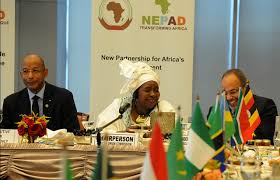
 On July 31, 2025, the African Union Development Agency – NEPAD (AUDA‑NEPAD) unveiled a set of landmark “Integrity & Equity Principles for Carbon Markets” during a high-level dialogue in Nairobi. The initiative includes the launch of a Continental Coordinating Mechanism and a Digital Tracking Platform to monitor Article 6 readiness and standardize carbon market practices across all 55 member states.
The new framework aims to guarantee transparency, fairness, and development‑oriented benefits from carbon trading — addressing past criticisms of volatility, weak oversight, and inequitable reward distribution in voluntary carbon markets.
Financing climate action: unlocking green capital for Africa
Part of the broader reform agenda is to leverage carbon markets as a major channel for climate finance across Africa. The continent’s recent climate agenda — deepened at Second Africa Climate Summit (ACS2) in September 2025 — calls for robust financial mechanisms to support locally‑led climate solutions, including via the marketization of emissions reductions and carbon offset projects.
 Complementing this institutional push, the African Development Bank (AfDB) unveiled a new facility — the Africa Carbon Support Facility (ACSF) — designed to de‑risk carbon market investments, mobilize private capital, and support high‑integrity carbon credit supply across the continent.
These efforts reflect a strategic shift: carbon credits are no longer viewed simply as voluntary offsets for emissions, but as viable instruments for climate finance, rural development, green infrastructure, and sustainable energy projects.
Building trust: integrity, regulation and market infrastructure
A critical barrier to effective carbon markets in Africa has long been weak governance, inconsistent standards, and limited transparency — factors that have discouraged large scale investment and raised fears of “green‑washing.” The new continental principles therefore emphasize clear regulatory frameworks, robust project certification, social equity, and inclusive benefit sharing.
Several African financial centres and regulatory authorities appear ready to respond. In South Africa, the national treasury has published a consultation paper aimed at developing a modern, high-integrity carbon credit market, clarifying the legal status of carbon credits, improving registry infrastructure, and facilitating cross‑border trading.
Meanwhile, private and public institutions in Morocco are strengthening their role in carbon finance. The Casablanca Finance City Authority (CFCA) recently signed strategic agreements during Climate Week in New York, aiming to accelerate the development of voluntary carbon markets across Africa and to provide the regulatory and financial infrastructure needed for credible market growth.
Opportunities and challenges ahead
For African countries, credible carbon markets promise to channel foreign investment into climate‑smart projects: reforestation, renewable energy, rural electrification, ecosystem restoration, and clean cooking initiatives — all while generating long‑term income streams and employment opportunities.
 However, success will depend on rigorous implementation of standards — ensuring that carbon credits represent genuine emissions reductions or removals, that communities benefit rather than suffer land dispossession, and that projects deliver social as well as environmental value.
It will also require strong institutional capacity: transparent registries, robust verification procedures, credible certification bodies, and consistent compliance with both continental and global standards (such as those under the Paris Agreement).
The way forward: Africa shaping global carbon finance on its own terms
With the launch of the Integrity & Equity Principles, the ACSF platform, and renewed commitment from regional financial institutions, Africa appears poised to assert greater agency in global climate finance.
This moment offers an opportunity for African nations to harness their vast natural capital — forests, renewable energy potential, agricultural lands — to drive a new growth model. A model that combines climate responsibility with economic development and social inclusion.
Yet the promise will only be fulfilled if integrity, transparency, and equity remain at the core of implementation.
As Africa redefines its place in the global carbon economy, robust markets — built on trust — could unlock billions in investment, foster climate resilience, and deliver sustainable prosperity for its people.